
IELTS
What is IELTS - Benefits of IELTS - Paper Pattern - Tips - Cost - Coaching Classes
Sharjeel Saqib
11/19/20243 min read
What is IELTS?
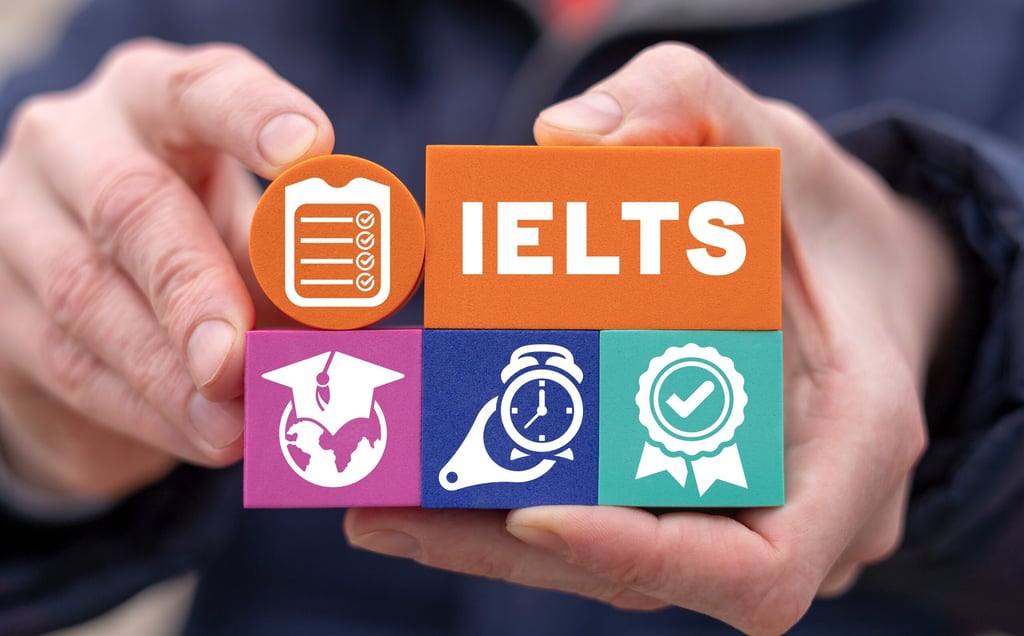
IELTS (International English Language Testing System) is a globally recognized test that measures the proficiency of non-native English speakers in the English language. It is widely used for immigration, education, and professional purposes. The test evaluates a person's ability to use and understand English in four key areas: Listening, Reading, Writing, and Speaking.
There are two types of IELTS tests:
IELTS Academic – for those who wish to pursue higher education or professional registration in an English-speaking country.
IELTS General Training – for those who are migrating to an English-speaking country, or need English for workplace training or secondary education.
Benefits of IELTS
Global Recognition: Accepted by over 11,000 institutions across 140 countries including universities, employers, immigration authorities, and professional bodies.
Study Abroad: Helps you meet the English language requirements for admission to universities, colleges, and other educational institutions in English-speaking countries like the UK, USA, Canada, Australia, and New Zealand.
Career Advancement: Many employers require IELTS as proof of English language proficiency. It opens up job opportunities both in English-speaking countries and in international companies.
Immigration: IELTS is often a mandatory requirement for immigration to countries like Canada, Australia, and the UK.
Objective Assessment: It provides an unbiased and accurate measure of your English proficiency.
Improved Language Skills: Preparing for IELTS enhances your ability to read, write, speak, and listen in English, which can help you in your studies and career.
IELTS Paper Pattern
The IELTS test is divided into four sections:
Listening (30 minutes):
4 sections, each with 10 questions.
Topics include conversations, monologues, and academic discussions.
Reading (60 minutes):
3 sections.
Academic test: Focuses on academic texts, including articles and reports.
General Training test: Includes everyday reading materials like advertisements, notices, and articles.
Writing (60 minutes):
Academic: 2 tasks:
Task 1: Describe a graph, chart, diagram, or process.
Task 2: Write an essay in response to a point of view, argument, or problem.
General Training: 2 tasks:
Task 1: Write a letter (formal, semi-formal, or informal).
Task 2: Write an essay in response to a problem or argument.
Speaking (11-14 minutes):
An interview with an examiner, divided into three parts:
Part 1: Introduction and general questions.
Part 2: Short speech on a given topic.
Part 3: Discussion on more abstract issues related to the topic in Part 2.
The overall IELTS band score ranges from 0 to 9.
IELTS Tips
Practice Listening:
Listen to a variety of English materials (e.g., podcasts, news, movies) to improve your listening comprehension.
Practice note-taking during listening tests, as this will help you recall important information.
Improve Reading Speed:
Time management is key. Practice reading quickly but effectively to answer questions within the given time.
Skim and scan the passage to get the main ideas before reading in detail.
Master Writing Task 1 & 2:
For Academic Writing Task 1, practice interpreting graphs, charts, and diagrams.
For Task 2, structure your essay clearly: Introduction, Body, Conclusion.
Always include a clear thesis statement and support your arguments with examples.
Practice Speaking:
Speak with a native English speaker, or practice with a friend or tutor.
Be confident, even if you make mistakes. Fluency is more important than accuracy in speaking.
Use IELTS Practice Materials:
Use official IELTS preparation books and online resources. Take mock tests to familiarize yourself with the format.
Stay Calm and Relaxed:
Avoid stress before and during the test. Being relaxed helps you focus and perform better.
IELTS Test Cost in Pakistan
The cost of the IELTS test in Pakistan generally ranges from PKR 31,000 to PKR 37,000 depending on the test center and location. It’s always recommended to check the specific test center for the latest fees and payment details, as the prices may vary.
Coaching Classes for IELTS in Pakistan
There are many coaching centers in Pakistan that offer IELTS preparation. Some of the top centers include:
British Council Pakistan:
Offers both in-person and online IELTS preparation courses.
British Council has authorized test centers and a wealth of resources to help students prepare.
AEO Pakistan:
Another official test provider in Pakistan.
Offers regular preparation classes for both Academic and General IELTS.
KIPS IELTS:
Known for their experienced instructors and structured approach.
Offers classroom coaching, online classes, and mock tests.
Smart Brain IELTS:
Offers customized training based on the student’s needs.
Provides both group and individual coaching.
The IELTS Academy:
Offers preparation courses for IELTS with a focus on practical speaking, writing, reading, and listening skills.
Punjab College of Commerce (PCC):
Provides IELTS coaching and mock tests to help students prepare for the exam.
IELTS Coaching Lahore:
Offers specialized training and test-taking strategies for IELTS exam candidates.
Many of these centers also provide online classes for those who cannot attend in person. When selecting a coaching center, consider factors like the qualifications of the instructors, student reviews, and the available study material.
If you're planning to take the IELTS, starting with solid preparation is key to achieving the score you need!
OUR OFFICES
E-mail: info@cambridgeconsultantedu.com
Visit our Social Media Links
United Kingdom (UK):
130 Wethington Road, Manchester England, M168FB Whatsapp No: +923276275807
Islamabad:
Blue Area, Fazal-e-Haq Road, Safdar Mansion Plaza,2nd Floor,Office NO 2, Islambad Whatsapp No: 03276275807
Gujrat:
GT Road, Area Gate Near Naseem Medical Center and HBL Bank, Gujrat Whatsapp No: 03276275807
Lahore:
Tayyaba Tower, Sector E, Bahria Town, Main Boulevard, Lahore. Whatsapp No: 03276275807
Mansehra:
Office No.10, Madina Market, channal, Abbottabad Road, Mansehra Whatsapp No: 03335585011
Battagram:
Office No.4, Sarhad Market PSO Pump, Battagram Whatsapp No: 03335585011